Tracing Preform Flash and Bubbles Through the Whole Mold: An Engineering Look at Refurbishment
Publish Time: 2026-07-17
Flash on a preform's neck and a bubble appearing after the neck crystallizes look like two unrelated defects, but in practice they're often two symptoms of the same root cause. Finding that cause means checking every system that touches the preform on its way out of the mold. Foshan Baijinyi Precision Technology Co., Ltd. (BJY), established in 2011 and focused on PET preform molds, blow molds, and precision spare parts, treats mold refurbishment as a diagnostic exercise across the hot runner, the cavity assembly, and the take-out robot, because replacing the wrong component fixes nothing.
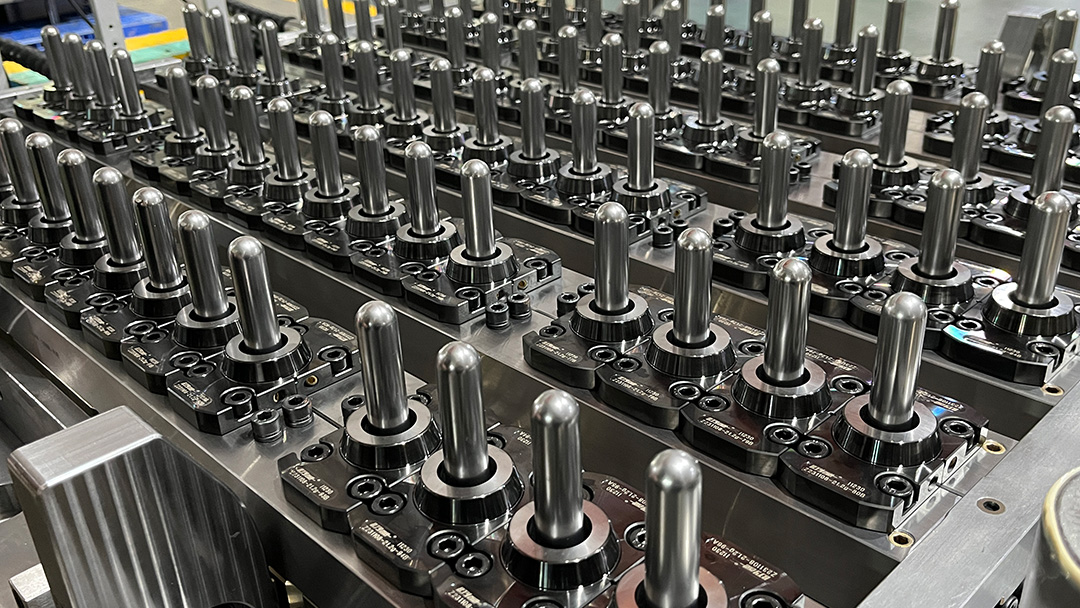
Consider a representative case: a 96-cavity preform mold on a Husky HyPET series machine, running a 21.2g preform, exhibiting flash along the parting line of the neck ring plus intermittent bubbling after the neck crystallized. BJY's engineers began with the hot runner, since uneven melt temperature or pressure delivery across cavities can distort neck geometry in ways that look identical to a mechanical fit problem. Here the hot runner's flow balance and heater performance were confirmed within spec, so it was serviced rather than rebuilt. The investigation then moved to the coldhalf assembly, where the neck ring, lock ring, cavity, cavity flange, and gate insert all mate together at extremely tight clearances to form the finished neck geometry. When any of these surfaces wears, even by a fraction of a millimeter from repeated high-pressure injection and thermal cycling, the parting line no longer seals cleanly, and molten PET finds its way into that gap as flash. A degraded seal in the same area can also trap air that later shows up as a bubble once the neck has crystallized and can no longer release it.
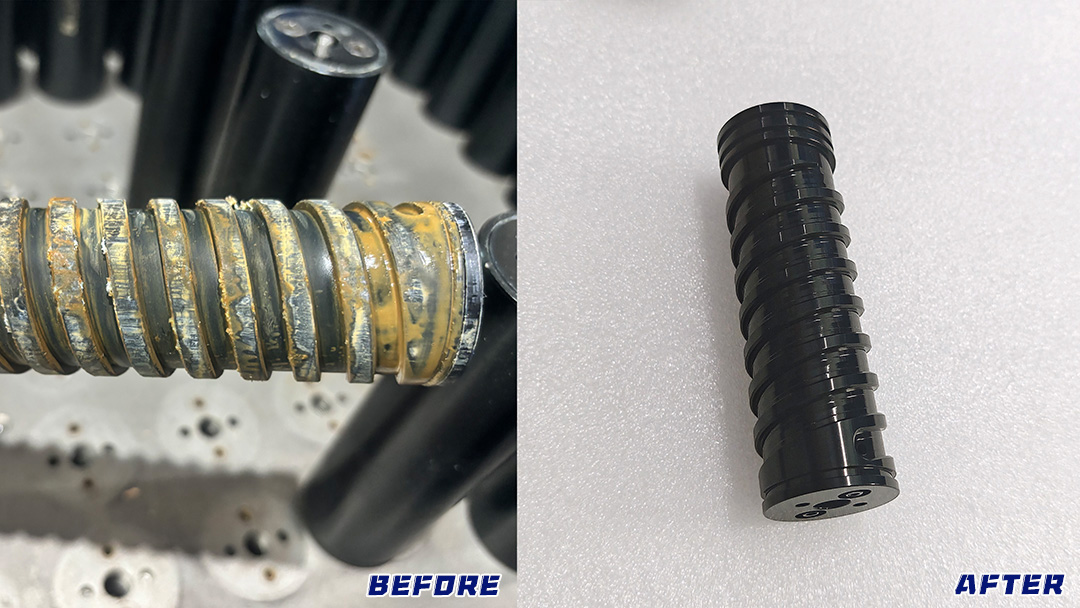
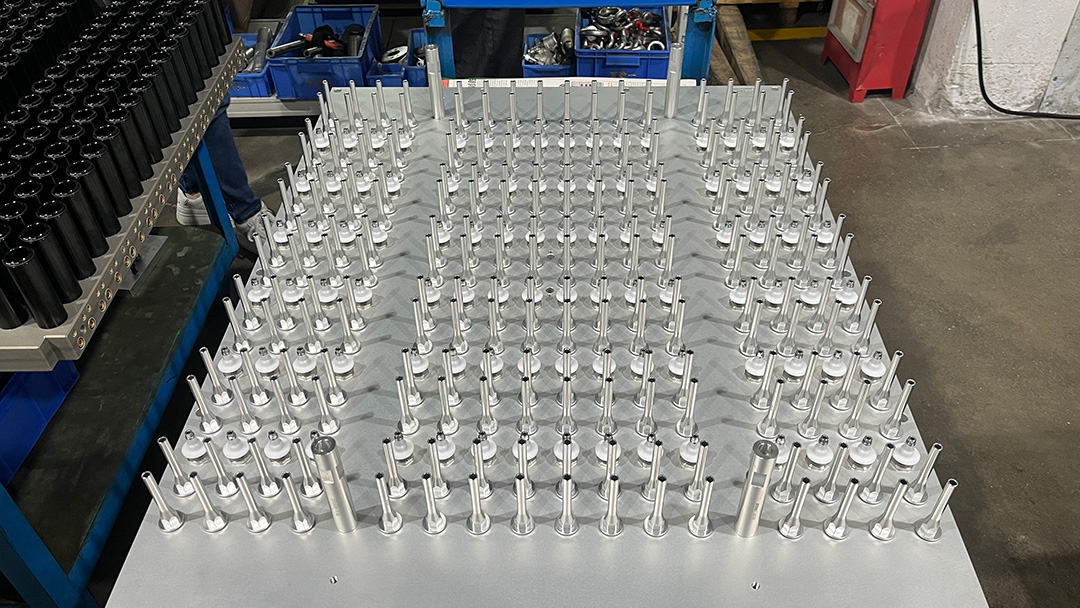
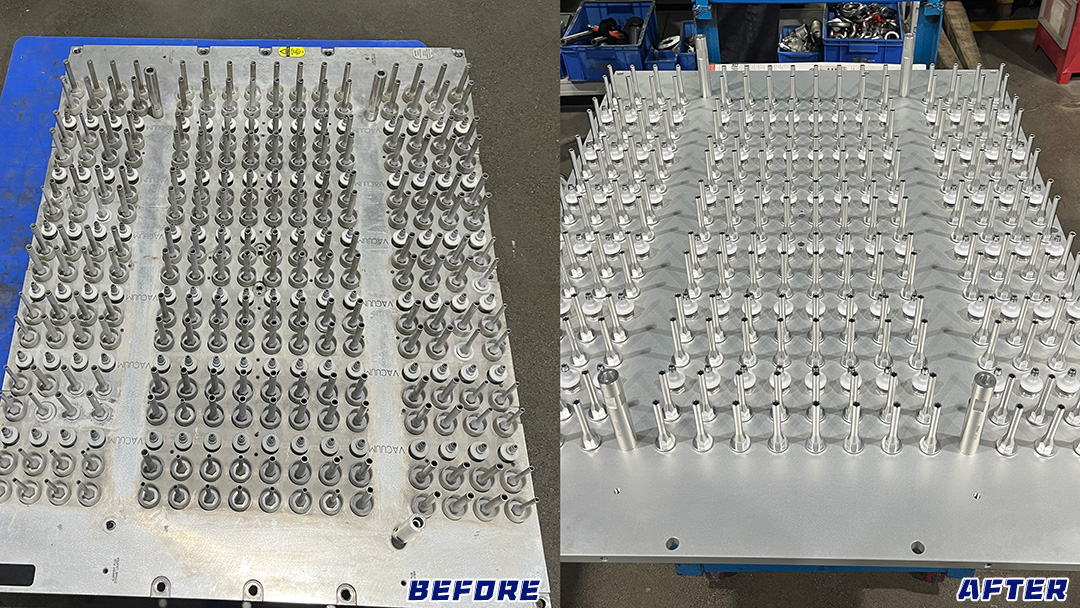
BJY's engineers measure the actual dimensions of each precision component against the mold's original specification, identifying precisely where clearance has opened beyond tolerance rather than assuming every part needs replacement. For this project, that inspection led to full replacement of all 96 sets of neck rings, lock rings, cavities, cavity flanges, and gate inserts, plus selective replacement of mold cores where wear was confirmed. On the take-out side, all 96 EOAT preform absorbers were replaced as a set. This detail is easy to overlook, but a worn absorber can itself introduce handling-related surface defects that get mistaken for cavity-side problems. Quick-wear components, including wear-resistant copper plates, guide sleeves, slide guide rails, slide bearings, screws, and seal rings, were replaced in the same pass, and both the water and pneumatic channels were deep-cleaned and de-rusted to restore proper cooling and ejection performance.
This kind of root-cause refurbishment is fundamentally different from a generic clean-and-relube service call limited to one subsystem. It requires tracing a surface defect on the finished part all the way back through the hot runner, the cavity tooling, and the take-out mechanism until the actual worn component is identified. For engineering teams chasing flash, bubbles, or parting-line defects that process adjustments haven't resolved, that's the level of inspection worth requesting before assuming the mold is beyond repair.