products
HomeProductsBJY 450 ml PET Blowing Mold

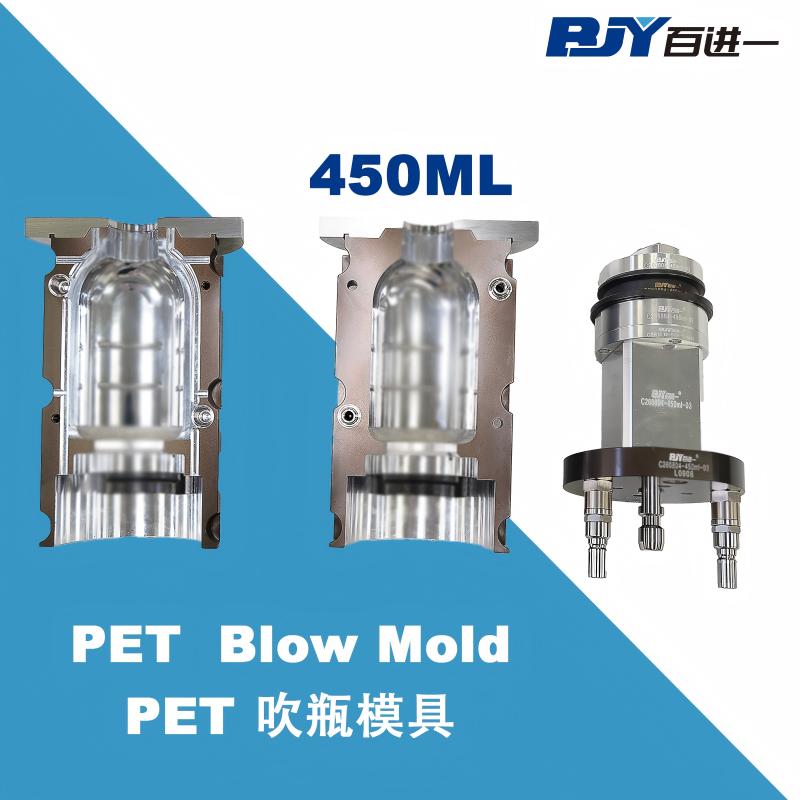
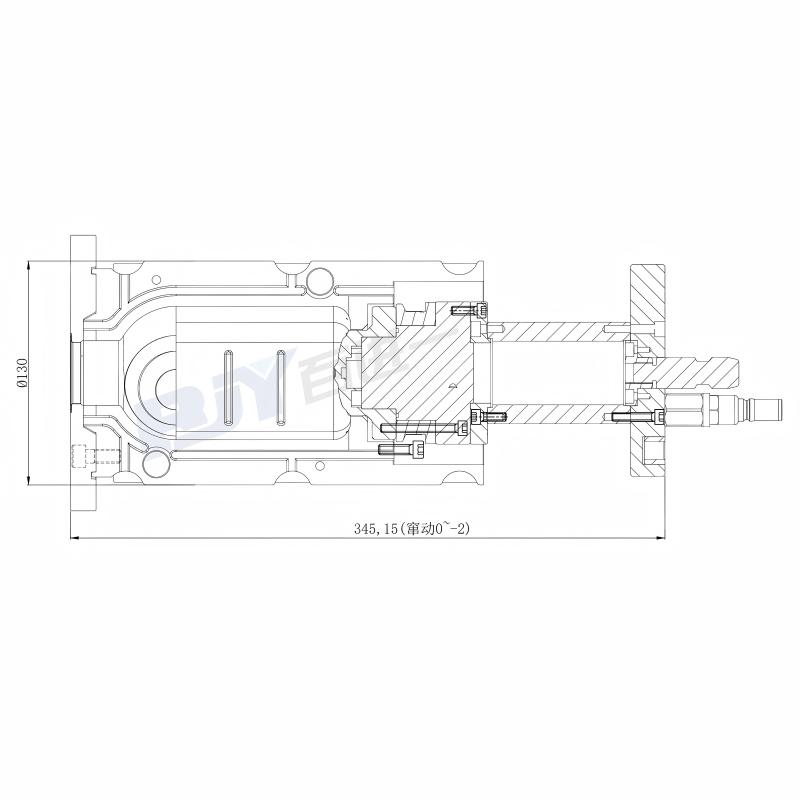
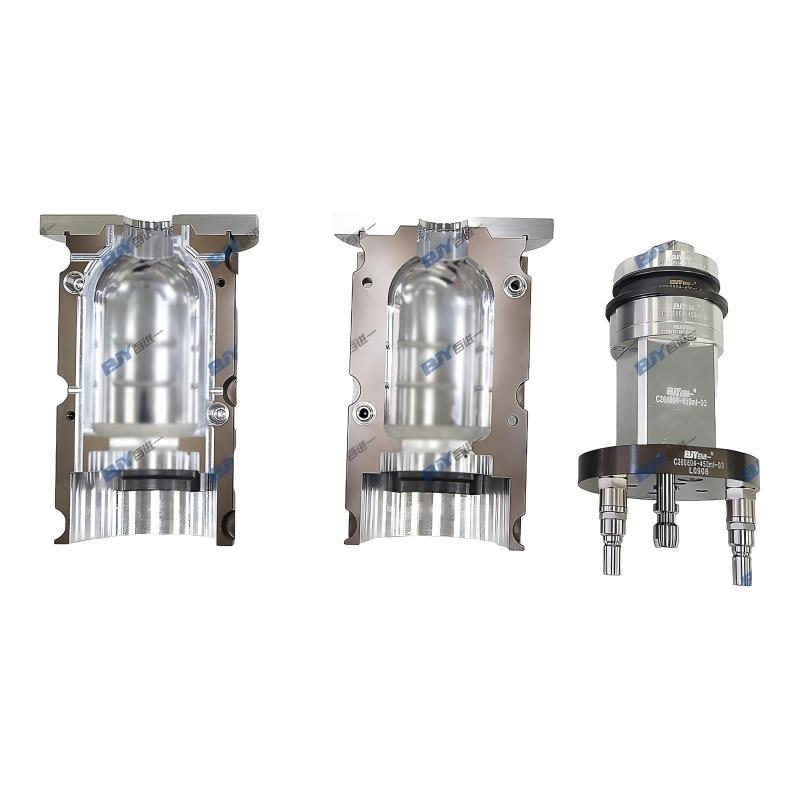
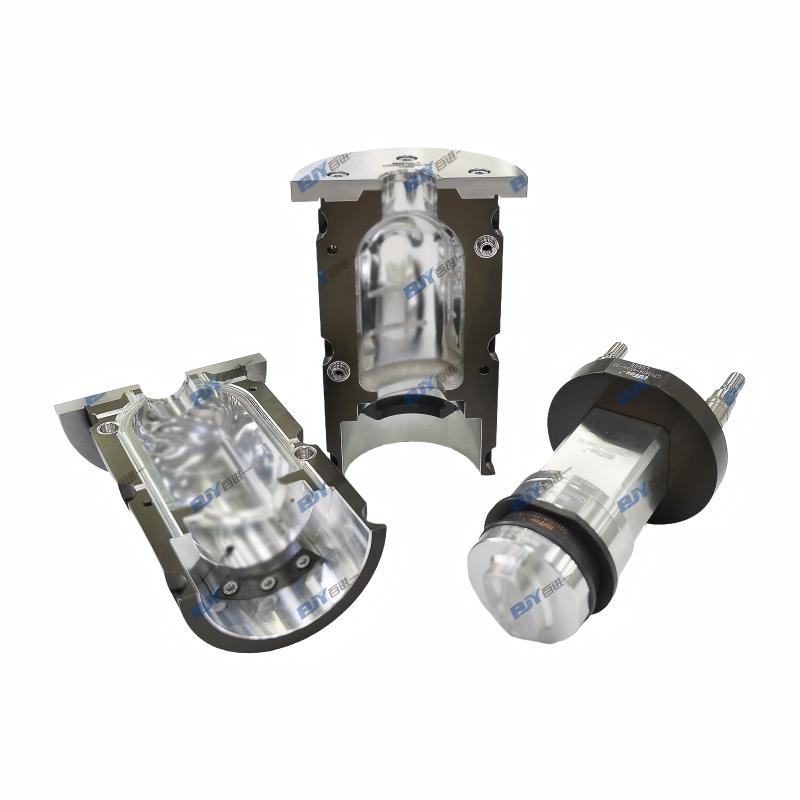
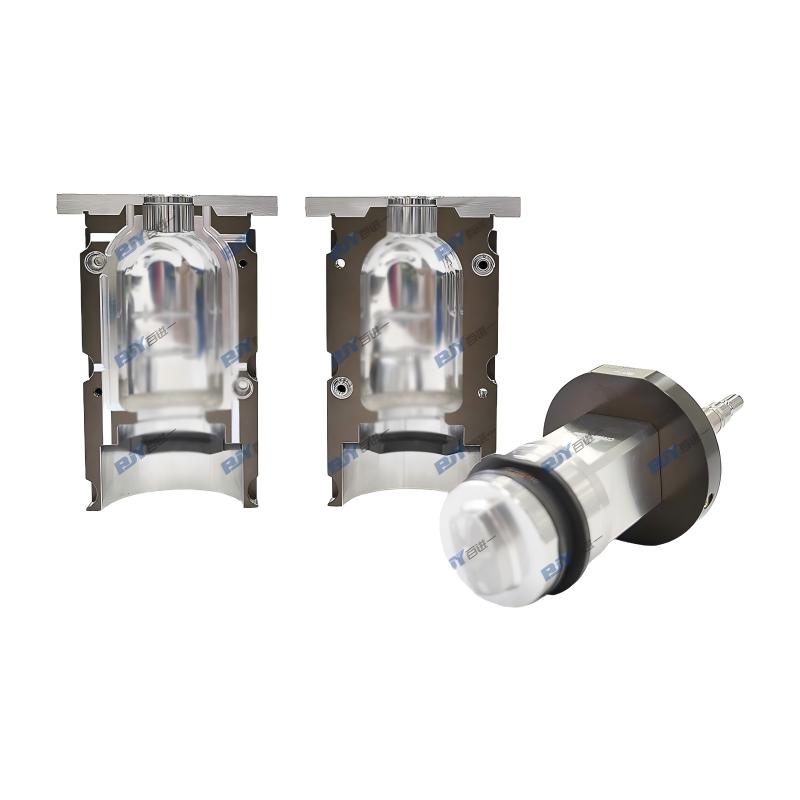
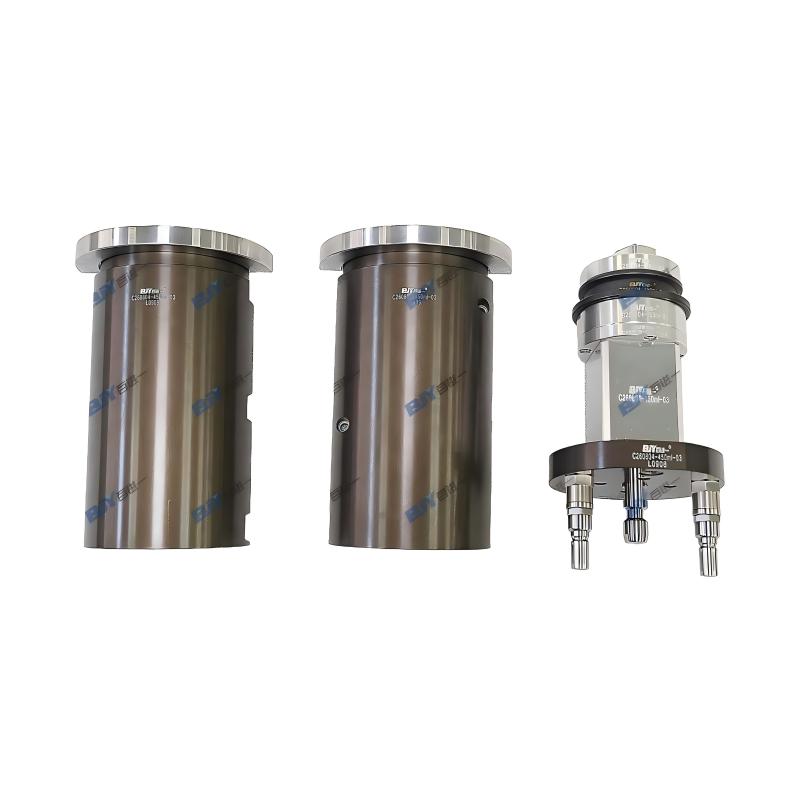
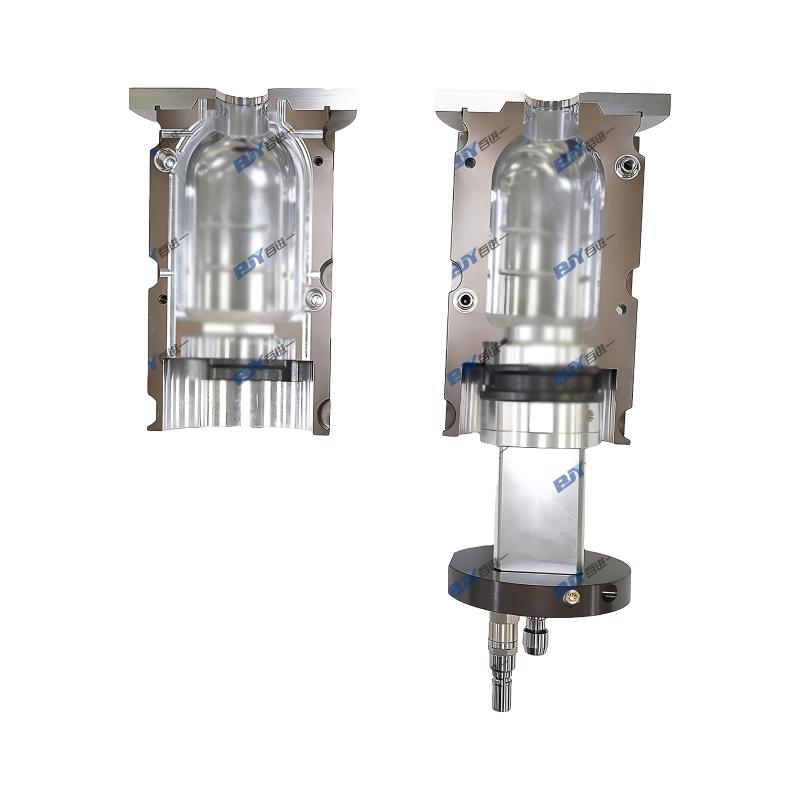
BJY 450 ml PET Blowing Mold

Walk down an aseptic bottling line and the defect that stops production most often is not the one on the bottle drawing. It is a bottle lying on its side on the air conveyor, or one that wobbles as it enters the capper. On a 450ml PET bottle that behaviour usually traces back to the base, the part of the mould that gets the least attention during quotation and the most punishment in service.

The base has to do three things at once. It has to be formed late enough in the blowing sequence that material still flows into the feet instead of being stretched thin. It has to cool quickly enough that the base is dimensionally set before the bottle is ejected. And it has to release without dragging, because a base pulled slightly out of shape at ejection will stand differently from the one beside it.
BJY's engineers work on the base as a cooling problem first and a shape problem second. The base insert is designed together with the water circuit that serves it, because a base geometry that cannot be cooled evenly will not hold its dimensions however accurately it is machined. Draft angles, the radius where the base meets the body and the position of the shut-off are then set so the bottle leaves the insert cleanly. Where a line runs at speed around curves, we also look at the standing diameter against the conveyor rail guidance, since a base that is geometrically correct but marginally out of size behaves differently on a narrow rail.
The confirmation is a trial batch. Bottles from every cavity are stood on a flat surface and checked for wobble, then measured against the drawing for base height, standing diameter and foot symmetry. The base is inspected after cooling rather than only hot off the machine, because some distortion appears only once the bottle has settled. Approving a mould this way is slower than measuring the cavity, and it is the only method that answers the question the plant actually asked.
Small decisions matter more here than anywhere else on the tool. A base that stands correctly removes a recurring manual task, and manual tasks on an aseptic line are the expensive kind.
×

Contact Us

captcha